
Why Dynamic Single-Molecule?
The interactions and dynamics of DNA-binding proteins in action
Today’s scientific trends are racing towards smaller scales and experimentation that provides both structural and mechanistic insights. To decipher biomolecular mechanisms you need methods capable of detecting the interactions between proteins and nucleic acids as they happen and at the molecular level. DNA-binding proteins are key regulators of genome function, guiding essential processes like gene expression, replication, and repair. Yet, bulk assays often miss the dynamic search, binding, and release behaviors that define their activity. Without real-time, single-molecule insights, the true complexity of these interactions remains hidden.
Overcome these challenges with Dynamic Single-Molecule technology through:
- Visualize how DNA-binding proteins locate, bind, and move along DNA at the single-molecule level
- Measure binding kinetics, affinity, and specificity in real time
- Uncover how these proteins regulate processes like transcription, replication, repair, and genome organization
Explore your research application
Explore what Dynamic Single-Molecule can mean for your field of interest
Text Link
DNA Replication
Study and visualize DNA replication mechanisms at the nanoscale
Use Dynamic Single-Molecule to obtain the full understanding of replication mechanisms
Available case studies:
Shed light on the role of SMC5/6 in regulating replication fork stability
Case study

Real-time insights into origin recognition and replisome formation
Case study

Replication in context: Uncover mechanisms ensuring replication fidelity and genome stability
Case study

Text Link
DNA Transcription
Study and visualize DNA transcription mechanisms at the nanoscale
Use Dynamic Single-Molecule to obtain the full understanding of transcription mechanisms
Available case studies:
Real-time observation of DNA exonuclease dynamics at base-pair level
Case study

Text Link
DNA Repair
Reveal the dynamics of DNA repair mechanisms
Use Dynamic Single-Molecule to obtain the full understanding of repair mechanisms
Available case studies:
Revealing molecular mechanism heterogeneity in UV-DDB-related DNA repair processes
Case study

Visualizing DNA translocation and lesion recognition
Case study

Revealing the facilitation of DNA repair through PARP1 condensation
Case study
Text Link
DNA Organization
Discover the mechanisms and roles of chromatin organization and decipher the epigenetic code
Use Dynamic Single-Molecule to obtain the full understanding of organization mechanisms
Available case studies:
Quantify SMC activity, conformation and interactions at the molecular level
Case study
Follow chromatin remodeler activity in real-time
Case study

Quantify nucleosome stability and cross-linking
Case study

Text Link
DNA/RNA Structure
Reveal the structural dynamics of RNA & DNA in real time
Use Dynamic Single-Molecule to obtain the full understanding of DNA/RNA structure
Available case studies:
Revealing stability and dynamics of telomeric G-quadruplexes
Case study

Elucidating toxic RNA misfolding dynamics in Huntington’s disease
Case study

Protein-mediated frameshift regulation in SARS-CoV-2
Case study

Text Link
DNA Editing
Study and visualize DNA editing mechanisms on the nanoscale
Use Dynamic Single-Molecule to obtain the full understanding of editing mechanisms
Available case studies:
Understand off-target activities of Cas for safer gene editing
Case study

Real-time insights into gene editing mechanisms
Case study
Solutions
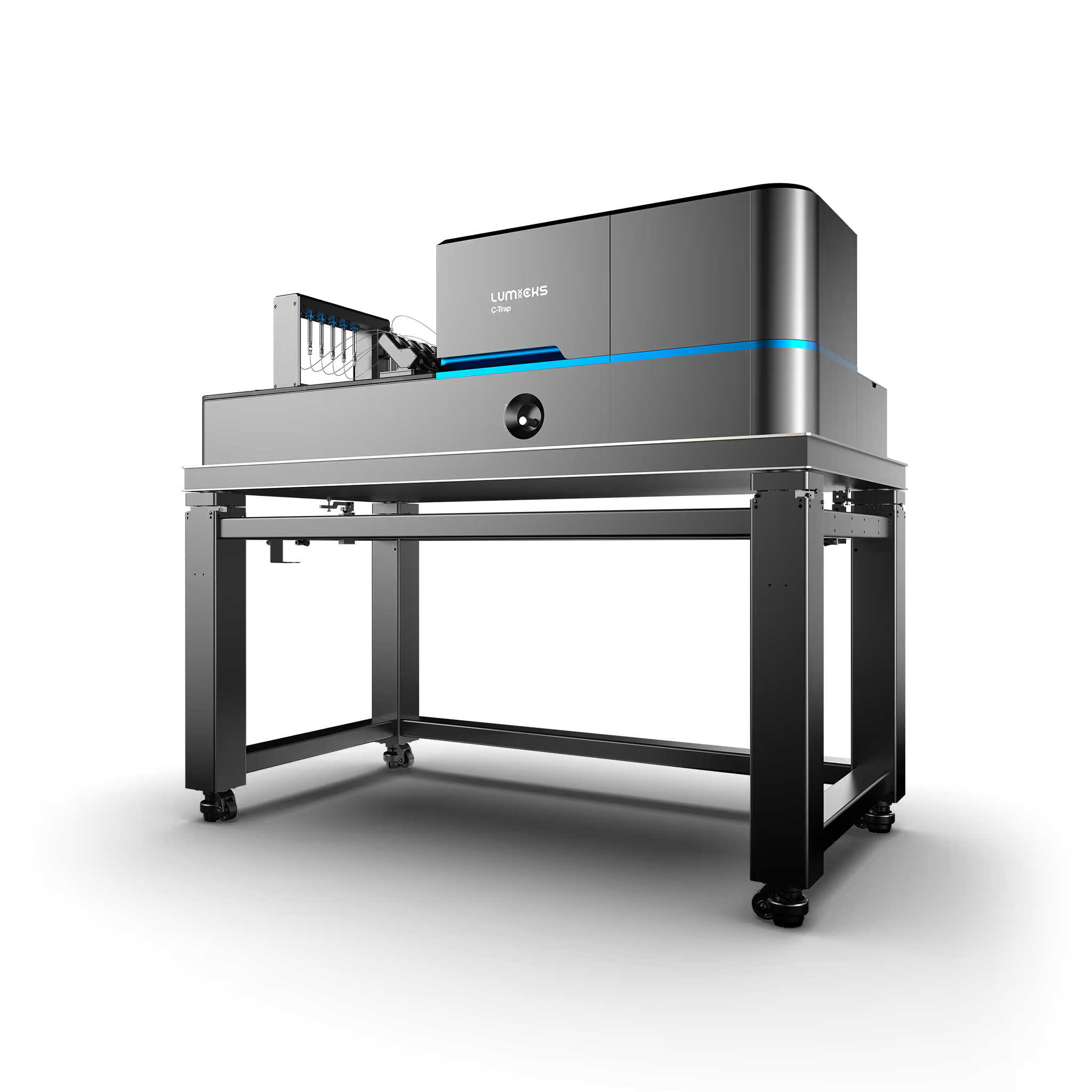
C-Trap
Molecular biology as never seen before
The C-Trap® provides the world’s first dynamic single-molecule microscope to allow simultaneous manipulation and visualization of single-molecule interactions in real time.
Technical note:
Filter DSM shows 3 items
To show 1 or more authors, we are using finsweet attributes v2
The publications detail page has the format for these authors
Filter DSM shows 3 items
To show 1 or more authors, we are using finsweet attributes v2
The publications detail page has the format for these authors
Single-Molecule Force Spectroscopy Reveals a High-Force Requirement for Dissociation of Integrin Transmembrane Domains
Hadawi, M. et al.
2026
Biophysical Journal
This is some text inside of a div block.

Large intra-chromosome heterogeneity leads to emergent nonlinear mechanics
van der Smagt, C. et al.
2026
Nature Physics
This is some text inside of a div block.
Mechanism underlying the high regulatory performance of the doxycycline riboswitch G12
Hoetzel, J. et al.
2026
Nature Communications
This is some text inside of a div block.
Technical note:
Filter DSM and show 4 latest
This shows the most recent card of each resource type filtered on Business Unit
Webinar, Scientific update, Whitepaper, Application note, Brochure.
We only show 4 and we have 6 types so the 2 older ones are hidden.
In design only 1 is shown, but the rest will be loaded when published.
Filter DSM and show 4 latest
This shows the most recent card of each resource type filtered on Business Unit
Webinar, Scientific update, Whitepaper, Application note, Brochure.
We only show 4 and we have 6 types so the 2 older ones are hidden.
In design only 1 is shown, but the rest will be loaded when published.
Button Text

Molecular determinants of Smc5/6 association with DNA junctions
Webinar
March 26, 2026
01-01-20
Smc5/6 is an essential genome maintenance complex that regulates DNA replication and repair. Its roles in managing DNA intermediates generated from these processes are intimately linked to its ability to associate with various forms of DNA. To gain insights into how Smc5/6 engages with different DNA structures, we use the C-Trap single-molecule setup in combination with several DNA substrates. We will presence our recent findings of how Smc5/6 preferentially associates with DNA junctions flanking a ssDNA gap, a common DNA intermediate generated during genome maintenance processes. We will also discuss how other genome protecting factors can influence Smc5/6 junction binding behaviors and the implications of our findings in genome maintenance processes.
This is some text inside of a div block.


Linking Mechanical Stability with in vivo Recombination: Single-molecule Research Reveals Bacterial Antibiotic Resistance
Scientific update
January 4, 2025
01-01-20
This is some text inside of a div block.

No items found.
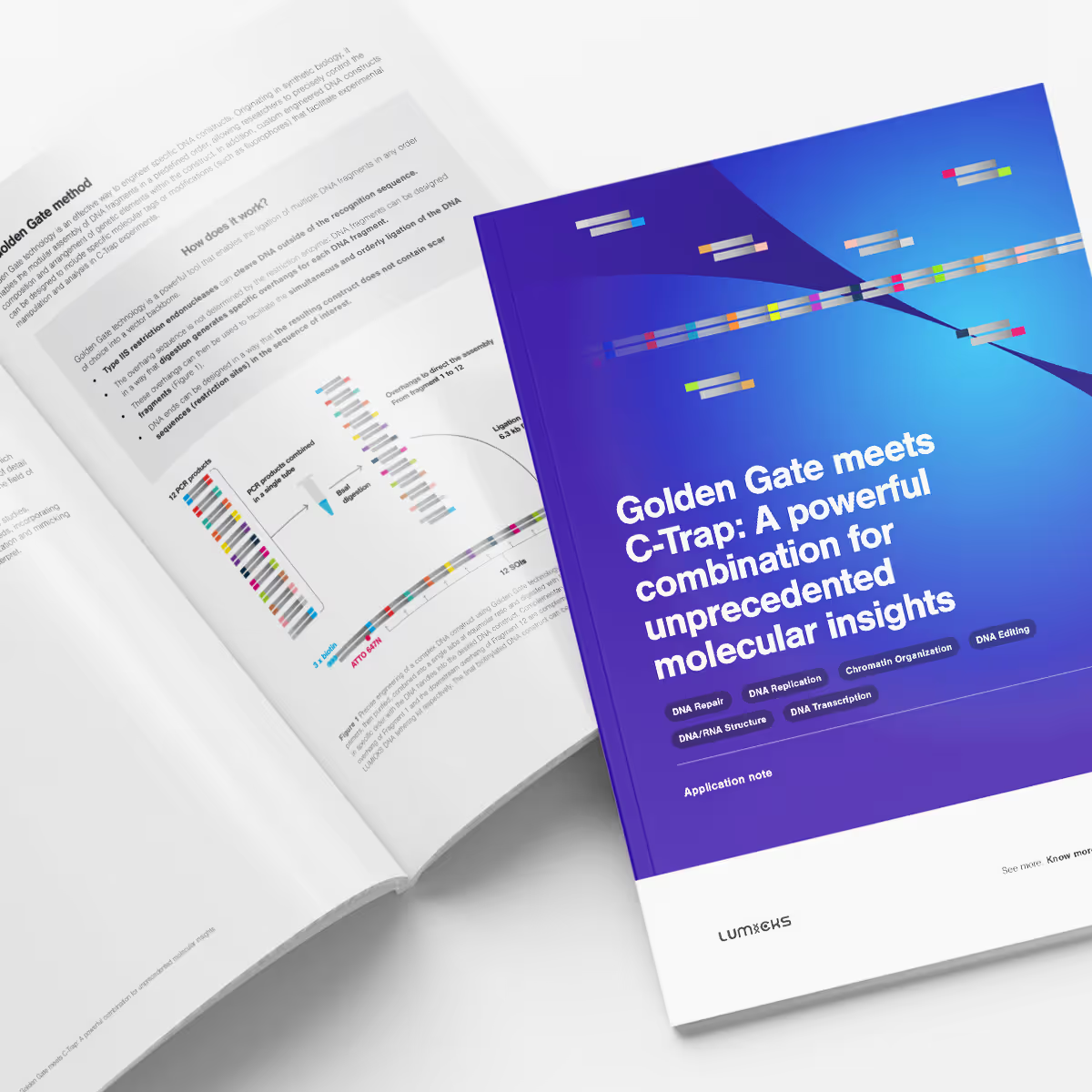
Golden Gate meets C-Trap: A powerful combination for unprecedented molecular insights
Application note
December 18, 2024
01-01-20
Precisely manipulating genetic material at the single molecule level is gaining importance across life sciences – and so do the tools that allow researchers to do exactly that. The C-Trap system combines single molecule fluorescence microscopy with optical tweezers to manipulate DNA, allowing researchers to directly observe and track molecular events as they occur. Designing and creating specific DNA constructs is crucial for maximizing the potential of single molecule studies. In this application note we introduce the powerful combination of cutting edge biochemistry and single-molecule visualization methods to increase throughput and maximize the results gained from each individual measurement.
This is some text inside of a div block.
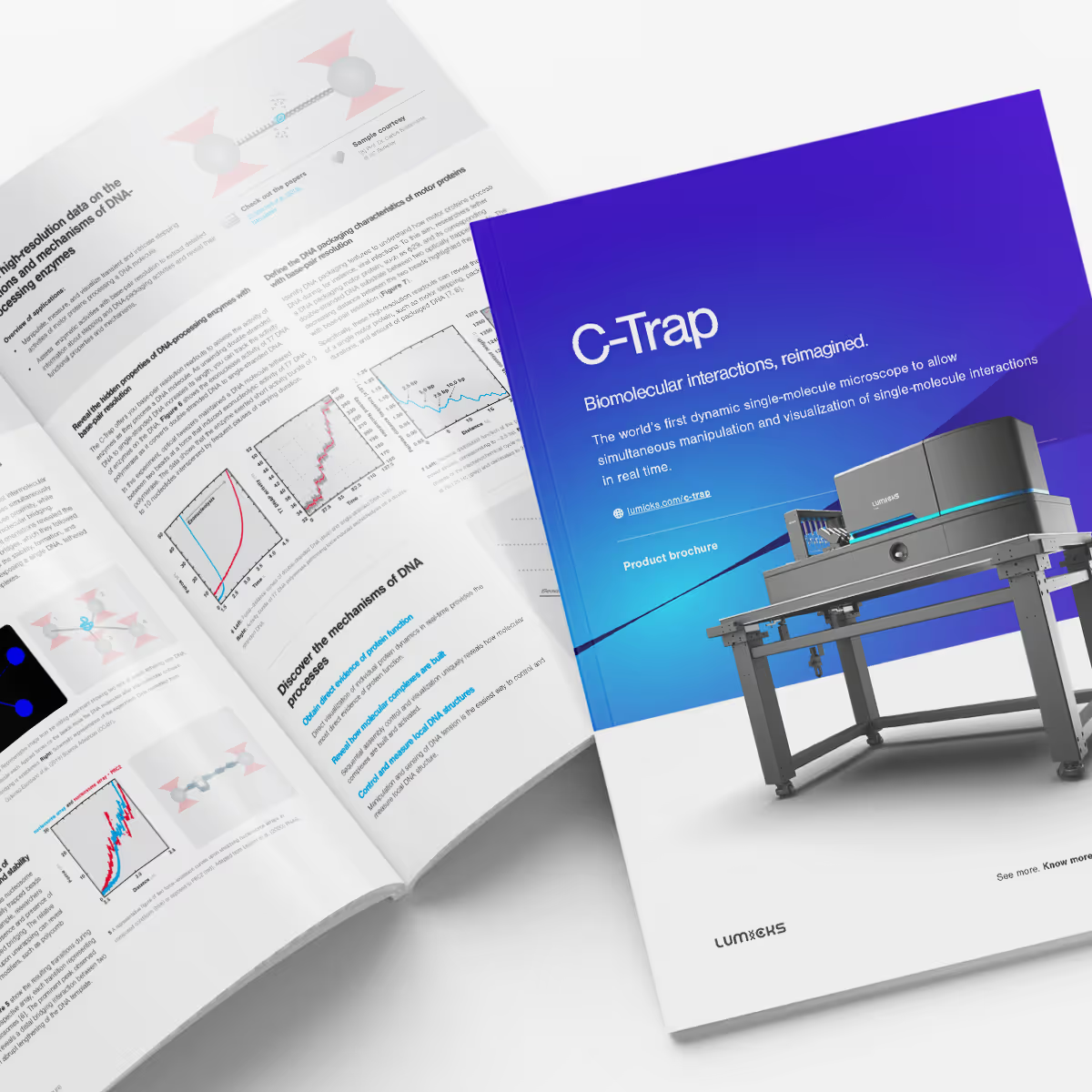
C-Trap Product Brochure
Brochure
February 28, 2025
01-01-20
This is some text inside of a div block.
